The World Bank’s Role in Benin’s Development

weatherontheair.com – The World Bank has been a significant partner in Benin’s development journey, aligning its programs with the government’s development plan to address various socio-economic challenges. This partnership is encapsulated in the Country Partnership Framework (CPF), which covers the period from 2018 to 2023, aiming to enhance Benin’s economic resilience and inclusive growth.

Financial Support and Project Implementation

The World Bank has provided substantial financial support to Benin, with recent approvals including $150 million in International Development Association (IDA) financing to empower women and strengthen the potential for strong and inclusive growth. Additionally, another $150 million in IDA financing was approved to enhance food security and improve the competitiveness of agri-food value chains. These funds are crucial for addressing immediate development needs and laying the groundwork for sustainable growth.

Focus on Climate Resilience and Economic Diversification

Recognizing the impact of climate shocks on Benin’s development gains, the World Bank has emphasized the importance of building a resilient economy. The Country Climate and Development Report (CCDR) proposes strategies to mitigate the effects of climate change and promote sustainable development. This includes support for renewable energy and digital economy development, which are essential for diversifying Benin’s economy and reducing its vulnerability to external shocks.

Addressing Gender Inequalities

The World Bank is committed to supporting Benin in tackling gender inequalities through a series of reforms in Development Policy Operations. This includes initiatives aimed at providing equal opportunities for both men and women, which is crucial for achieving inclusive growth and social cohesion.

Financial Sector Development

The financial sector in Benin is shallow and segmented, with limited access to financial services for many citizens. The World Bank has identified the financial sector as a key area for development, focusing on improving financial inclusion and stability to support broader economic growth.

Stakeholder Engagement and Monitoring

To ensure that its programs are effective and aligned with the needs of the Beninese people, the World Bank conducts regular surveys to gauge stakeholder perceptions. The Country Opinion Survey in Benin provides valuable insights that help the World Bank refine its strategies and improve its support.

Conclusion

The World Bank’s role in Benin’s development is multifaceted, encompassing financial support, strategic planning, and stakeholder engagement. By focusing on climate resilience, economic diversification, and gender equality, the World Bank is helping to build a more resilient and inclusive economy in Benin. This partnership is crucial for achieving sustainable development and improving the well-being of the Beninese population.
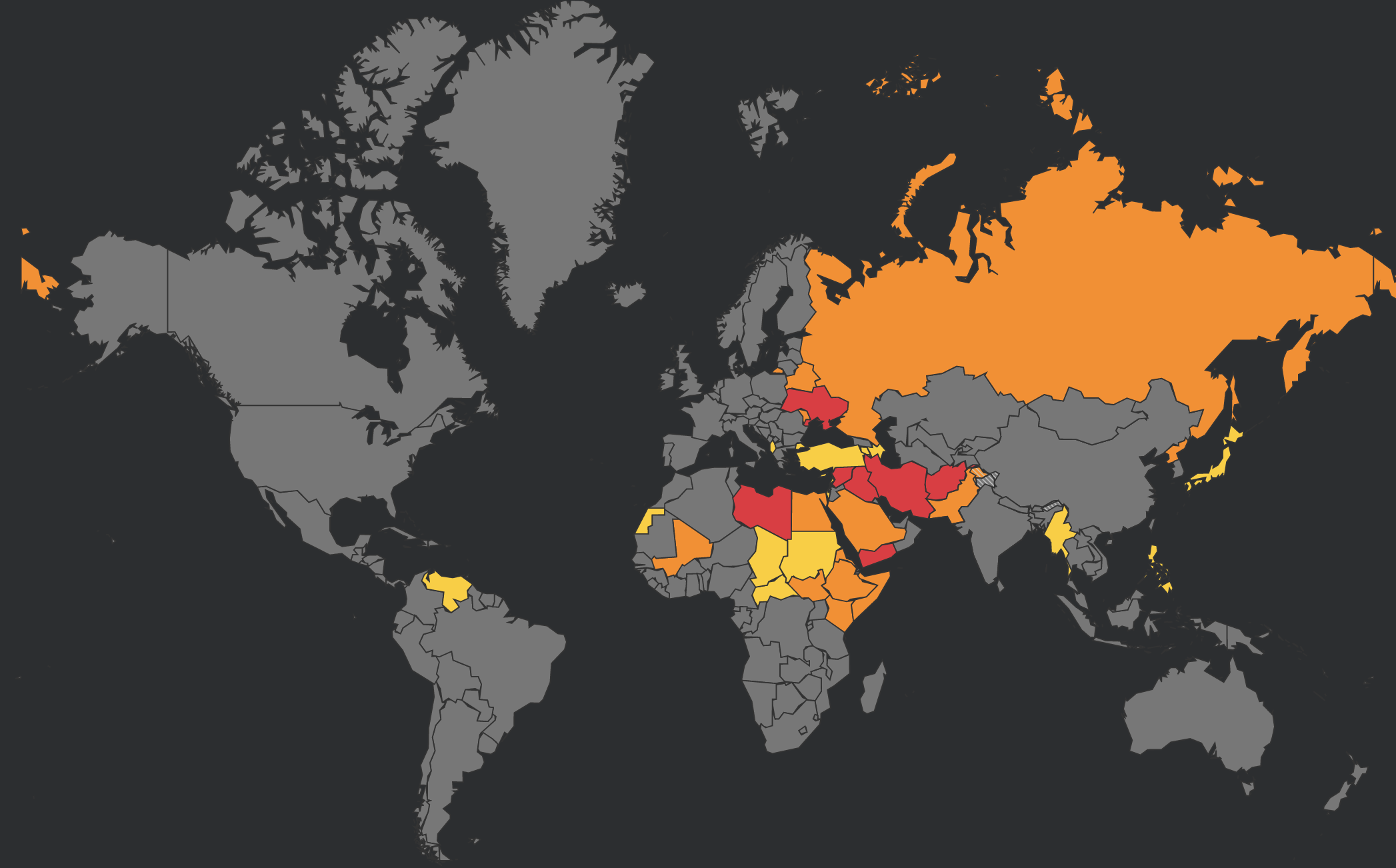
Conflict Zones: The World’s Most Dangerous Countries

weatherontheair.com – In an interconnected world, the concept of safety and security is paramount. However, there are regions where conflict, violence, and instability reign, making them some of the most dangerous places on Earth. These conflict zones are often characterized by a complex web of political, economic, social, and historical factors that contribute to their volatility. Understanding these areas requires a nuanced approach, recognizing the multifaceted nature of the issues at play.

The Roots of Conflict

Conflict zones are typically born from a combination of factors, including but not limited to:

  • Political Instability: Governments that are weak, corrupt, or authoritarian can lead to unrest and rebellion.
  • Economic Hardship: Poverty, unemployment, and inequality can fuel discontent and violence.
  • Social and Ethnic Divisions: Deep-seated divisions along ethnic, religious, or tribal lines can erupt into conflict.
  • External Interference: Foreign intervention, whether through military action, economic sanctions, or political manipulation, can exacerbate tensions.
  • Resource Scarcity: Competition over natural resources like oil, minerals, and water can ignite disputes.

The World’s Most Dangerous Countries

While the severity and nature of conflicts vary, some countries consistently rank among the most dangerous due to ongoing violence and instability. As of the knowledge cutoff in 2023, these include:

  • Syria: A decade-long civil war has devastated the country, leading to hundreds of thousands of deaths and millions of refugees.
  • Afghanistan: The withdrawal of U.S. and NATO forces and the Taliban’s return to power have plunged the country back into uncertainty and violence.
  • Yemen: A brutal civil war, compounded by foreign intervention and a Saudi-led blockade, has created the world’s worst humanitarian crisis.
  • South Sudan: Since gaining independence in 2011, the world’s youngest country has been embroiled in a civil war marked by ethnic violence and famine.
  • Democratic Republic of Congo: Despite its vast natural wealth, the DRC has suffered from decades of conflict, including a series of wars involving multiple African nations and militia groups.

The Human Impact

The consequences of living in a conflict zone are profound and far-reaching. Civilians are often caught in the crossfire, leading to high casualty rates. Women and children are particularly vulnerable to violence, exploitation, and abuse. Infrastructure is frequently damaged or destroyed, leading to a lack of basic services like healthcare, education, and clean water. Economic activity is disrupted, exacerbating poverty and food insecurity.

The Path Forward

Addressing the challenges of conflict zones requires a multifaceted approach:

  • Diplomacy and Peacebuilding: International efforts to broker peace and facilitate dialogue between warring parties are crucial.
  • Humanitarian Aid: Providing food, medicine, and shelter to those affected by conflict is essential to alleviate suffering.
  • Economic Development: Investing in sustainable development can help create jobs and reduce poverty, which are often root causes of conflict.
  • Security Sector Reform: Strengthening the rule of law and reforming security forces can help maintain order without resorting to repression.

Conclusion

The world’s most dangerous countries are a testament to the human capacity for violence and the devastating impact of conflict. Understanding the complexities of these zones is the first step toward finding lasting solutions. It requires the cooperation of international actors, local communities, and the warring parties themselves. While the path to peace is fraught with challenges, it is imperative that the global community continues to strive for a more stable and secure world for all.

Unraveling the Tragic World of Infanticide: The Silent Scream

weatherontheair.com – Infanticide, the killing of infants or newborns, is a grim reality that has persisted throughout human history. It is a subject that is often shrouded in silence, its victims unable to speak for themselves, and its perpetrators often hidden in the shadows of society. “The Silent Scream” is not just a metaphor for the unheard cries of these innocent lives lost, but also a true crime investigation that delves deep into the dark world of infanticide, seeking to understand the motives, the societal factors, and the psychological complexities that lead to such tragic acts.

The investigation begins with the heart-wrenching stories of the victims, whose lives were cut short before they even had a chance to begin. These are not just statistics; they are children who were born into a world that, for some reason, their parents or caregivers deemed too harsh or too difficult for them to navigate. The stories of these infants are a poignant reminder of the vulnerability of new life and the responsibility that comes with bringing a child into the world.

The perpetrators of infanticide are often mothers, driven to desperation by a myriad of factors. Some are young, unmarried women who find themselves pregnant in societies where such circumstances are stigmatized. Others may be struggling with mental health issues, postpartum depression, or the pressures of poverty and lack of support. The investigation reveals that many of these women feel trapped, with no viable options for themselves or their children. It is a stark illustration of how societal pressures and lack of support systems can push individuals to the brink.

The psychological aspect of infanticide is a complex web of emotions, mental health issues, and sometimes, a complete disconnect from reality. Experts in the field of psychology contribute to the investigation, providing insights into the minds of those who commit these acts. They discuss the role of postpartum psychosis, the impact of trauma, and the influence of societal norms on the mental health of new mothers. Understanding these factors is crucial in preventing future tragedies and providing support to those at risk.

The investigation also explores the legal and ethical dimensions of infanticide. Laws vary greatly from country to country, with some jurisdictions treating infanticide as a lesser charge than murder, recognizing the unique circumstances that may lead to such acts. Ethically, society grapples with the balance between holding individuals accountable for their actions and providing compassion and support to those who are suffering.

“The Silent Scream” is not just an investigation into a series of tragic events; it is a call to action. It highlights the need for comprehensive support systems for new mothers, including access to mental health care, social services, and community support. It advocates for a more compassionate approach to understanding and preventing infanticide, one that does not just focus on punishment but also on prevention and healing.

In conclusion, “The Silent Scream” is a sobering look at the reality of infanticide. It is an investigation that seeks to shed light on a dark corner of society, to give a voice to the voiceless, and to prompt a conversation about how we can protect the most vulnerable among us. Through understanding, compassion, and action, it is possible to turn the silent screams of these lost infants into a clarion call for change.